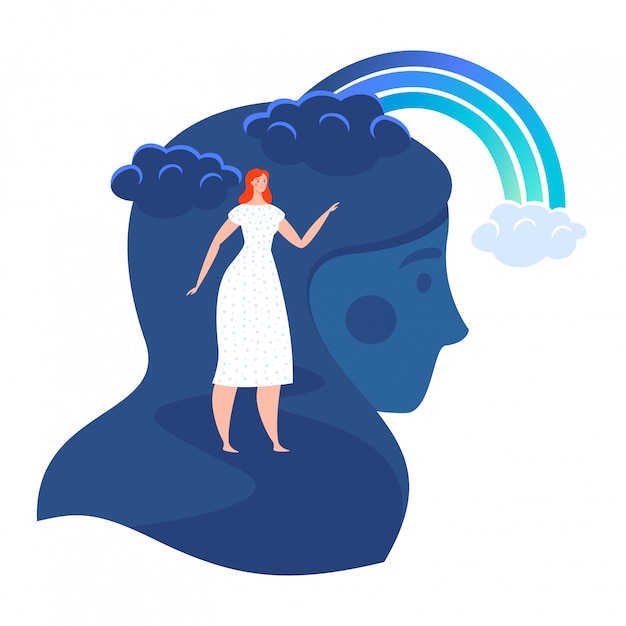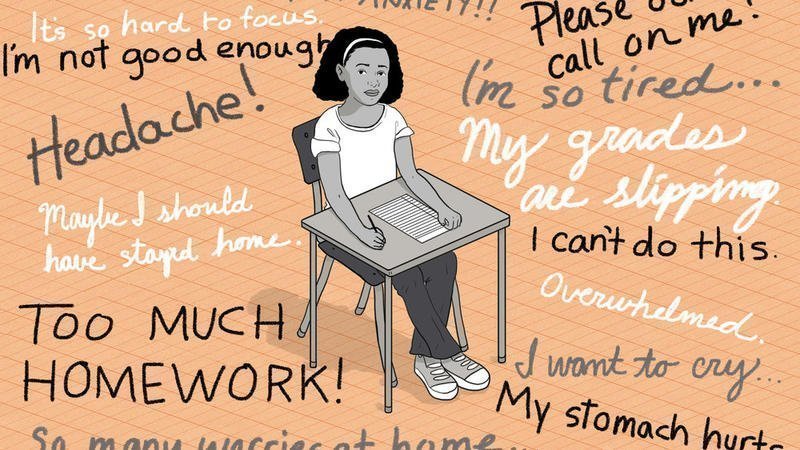
Experts and researchers often use terms like “epidemic” and “crisis” to characterize the mental health challenges currently facing American college students. Surveys in the last years have stated that about 60% of respondents felt “overwhelming” anxiety, while 40% experienced depression so severe they had difficulty functioning. (American College Health Association) A 2019 Pennsylvania State University study noted that demand for campus mental health services spiked by 30-40% during a period that saw only a 5% increase in enrollment. Mood disturbances represent only some of the prevalent mental health issues experienced by high school and college students and therefore do not present the entire picture. Others include serious problems such as suicide, self-harm, eating disorders, and addiction, which can be tremendously detrimental to the students’ health.
Mental health professionals stress the importance of talking about such issues, but students tend to consider these tendencies a regular part of school lifestyle. In other cases, they may lack the time, energy, will, and/or financial support to seek the assistance they need. The phrase “mental illness” encompasses a wide variety of different conditions that range from very mild to extremely severe. Students can be impacted by mental illnesses in their academics, their work, and their relationships. Students either experience mental health problems themselves or have friends/family members who are struggling with them. Being surrounded by people who have mental illnesses can be a struggle for individuals since they are required to cope with the necessary stressors in their environment, something which is often overlooked.
Students need to be educated on mental illnesses and be able to identify signs of poor mental health in themselves or others. They need to know where they can go for professional assistance if they or someone they care about is exhibiting signs of poor health. And they need to know that they’re not alone. It’s important to remember that just like some physical ailments can be life-threatening, so can mental illnesses. Teenagers tend to be more impulsive than adults, and often lack the propensity to pause and take a long-term view of a situation. The adolescent brain is still not fully developed, which may be the reason why even mentally healthy teenagers sometimes make short-sighted, impulsive, and potentially dangerous decisions.
Peers, family members, faculty, and staff may be personally affected out of concern for the students who are struggling. Roommates, peers, faculty, and staff can also experience profound grief over student suicides and suicidal behavior among the people around them. Depression and anxiety can have harmful effects on relationships and work productivity since it may make an individual disengage in his/her regular lifestyle. Children with mental health and learning disorders face frequent discipline and school failure, which can lead to problems later in life such as the lack of motivation and the encouragement to do bad habits. More students are also abusing alcohol or drugs to cope with the pain as a form of self-medication, although it simply worsens their health. 27,985 children aged 14-21 with autism, emotional disturbance, or other health impairments including ADHD drop out each year. And 45,846 students with specific learning disorders drop out each year as well. This data shows how much mental illnesses and poor mental health can impact an individual or community.
Understanding the complexities of mental health and being aware of the signs and symptoms of mental illness can help teens recognize the signs, symptoms, and suicidal/self-harm tendencies in themselves and others and give them the information that they need to seek out help before their health further deteriorates. Currently, suicide among teenagers is on the rise and is, in fact, the second leading cause of death for people between the ages of 15 and 24.
“Anything human is mentionable, and anything mentionable can be more manageable. When we can talk about our feelings, they become less overwhelming, less upsetting, and less scary.” — Fred Rogers. By placing importance on mental health in schools and colleges, and making sure that students are putting their mental soundness on the forefront, many accidents can be curbed.
Until mental health education is a mandatory aspect of all schools, teachers, and administrators can work to promote awareness with their students. Key elements to shine a light on include the concept of self-care and responsibility for one’s own mental health and wellness, with an emphasis on the fact that mental health is an integral part of health, and the concept of recovery from mental illness. Teachers and students should be provided with ways to recognize signs of developing mental health problems, and there should be opportunities around the awareness and management of mental health crises, including the risk of suicide or self-harm. When we empower students with the knowledge and encourage dialogue about these so-called “taboo topics”, students will be able to get the help they need.
Websites, Hotlines, Text Lines, Organizations for Professional Assistance:

United States
- Emergency: 911
- National Domestic Violence Hotline: 1- 800-799-7233
- National Suicide Prevention Lifeline: 1-800-273-TALK (8255); http://www.suicidepreventionlifeline.org
- Suicide Prevention, Awareness, and Support: http://www.suicide.org
- Lifeline Crisis Chat: https://www.contact-usa.org/chat.html
- Crisis Text Line: Text REASON to 741741 (free, confidential, and 24/7)
- Self-Harm Hotline: 1-800-DONT CUT (1-800-366-8288)
- Family Violence Helpline: 1-800-996-6228
- Planned Parenthood Hotline: 1-800-230-PLAN (7526)
- American Association of Poison Control Centers: 1-800-222-1222
- National Council on Alcoholism & Drug Dependency: 1-800-622-2255
- GLBT Hotline: 1-888-843-4564
- The Trevor Project: 1-866-488-7386 or text “START” to 678678.
- Provides crisis intervention and suicide prevention services to lesbian, gay, bisexual, transgender, queer & questioning—LGBTQ—young people under 25
- Veterans Crisis Line: https://www.veteranscrisisline.net
- International Suicide Prevention Directory: http://suicideprevention.wikia.com/wiki/International_Suicide_Prevention_Directory
- PsychCentral: https://psychcentral.com/find-help/
- Psychology Today: https://therapists.psychologytoday.com/rms
- GoodTherapy.org: http://www.goodtherapy.org/find-therapist.html
- American Association for Marriage and Family Therapy: http://www.aamft.org/iMIS15/AAMFT/Content/Directories/Find_a_Therapist.aspx
Canada
- Emergency: 911
- Hotline: 1-888-353-2273
- YourLifeCounts.org: http://www.yourlifecounts.org/need-help/crisis-lines

UK & republic of Ireland
- Emergency: 112 or 999
- Hotline: +44 (0) 8457 90 90 90 (UK – local rate)
- Hotline: +44 (0) 8457 90 91 92 (UK minicom)
- Hotline: 1850 60 90 90 (ROI – local rate)
- Hotline: 1850 60 90 91 (ROI minicom)
- YourLifeCounts.org: http://www.yourlifecounts.org/need-help/crisis-lines
Argentina
- Emergency: 911
- Recuerde siempre que si usted esta en una situación de emergencia debe comunicarse con los teléfonos: *107 (SAME-Sistema de Atención Medica de Emergencia), *911 (Emergencia policial), para atención telefónica inmediata. Si desea orientación telefónica a familiares y amigos, déjenos su mensaje y teléfono. Nos comunicaremos con usted.

Spain
- Emergency: 112
- Telefono De La Esperanza – 963916006 – http://telefonodelaesperanza.org/llamanos

Australia
- Emergency: 000
- Lifeline.org: https://www.lifeline.org.au/Get-Help/Online-Services/crisis-chat
- LifeLine Australia: 1-300-13-11-14
- YourLifeCounts.org: http://www.yourlifecounts.org/need-help/crisis-lines

South africa
- Emergency: 10 111 for police or 10 177 for an ambulance
- 24hr Helpline: 0800 12 13 14 or SMS 31393 (and we will call you back)
- Depression and Anxiety Helpline: 0800 70 80 90
- YourLifeCounts.org: http://www.yourlifecounts.org/need-help/crisis-lines

New zealand
- Emergency: 111
- Lifeline 24/7 Helpline: 0800 543 354
- Suicide Crisis Helpline: 0508 828 865 (0508 TAUTOKO)
- YourLifeCounts.org: http://www.yourlifecounts.org/need-help/crisis-lines

germany
- Emergency: 112
- Hotline: 800 111 0111
- Hotline: 0800 111 0222
- YourLifeCounts.org: http://www.yourlifecounts.org/need-help/crisis-lines

France
SOS Help
- Boite Postale 43,
- Cedex 92101
- Boulogne
- Hotline: 01 46 21 46 46
- Website: soshelpline.org
Suicide Ecoute (Paris)
- Hotline: 01 45 39 40 00
- Website: suicide.ecoute.free.fr
E.P.E. idF. Fil Sante Jeunes (Paris)
- Hotline: 0800 235 236
- Website: filsantejeunes.com
Fédération S.O.S Amitié France
- 11, rue des Immeubles industriels
- 75011
- Paris
- Hotline: (+33) (0)1 40 09 15 22
- Website: sos-amitie.com

Italy
Samaritans – ONLUS
- Via San Giovanni in Laterano 250
- 00184
- ROME
- Hotline: 800 86 00 22
- Website: samaritans-onlus.it
Telefono Amico Italia
- CP 337
- 38100
- Trento
- Hotline: 199 284 284
- Website: telefonoamico.it

serbia
SRCE Novi Sad
- NOVI SAD
- Hotline: (+381) 21-6623-393
- Website: centarsrce.org.yu
- E-mail Helpline: vanja@centarsrce.org.yu
- Linja Telefonike e Ndihmës (KOAPS)

pristina
Kosovo
- Hotline: (044) 08080
- Website: ltn08080.org
- E-mail Helpline: ltn@ltn08080.org
SOS Telephone
- Krusevac
- Hotline: 037 23 025

mexico
Mexico Suicide Hotline: 5255102550

japan
Befrienders International, Tokyo
- Hotline: +81 (0) 3 5286 9090
- Website: www1.odn.ne.jp/~ceq16010
BI Suicide Prevention Centre, Osaka
- Hotline: +81 (0) 6 4395 4343
- Website: spc-osaka.org
Tokyo English Lifeline
- 5-4 22 rm 302, Minami Aoyama
- Minao Ku
- 107-0062
TOKYO
- Hotline: Counselling: 03 5774 0992
- Hotline: Face to Face: 03 3498 0231
- Website: telljp.com

Brazil
AMA National Association
- Hospital de Pronto Socorro
- Largo Teodor Herzl S/NO
- Primero Andar
- CEP 90035/191
- PORTO ALEGRE – SP
- Website: samaritanos.cjb.net
CVV Sao Paulo – National Association
- Rua Herculano de Freitas
- 273 – Cerqueira César
- CERQUEIRA CESAR
- CEP 01308-020
- Sao Paulo – SP
- Hotline: 55 11 31514109
- Website: cvv.org.br
- E-mail Helpline: central@cvv.org.br
Centro de Apoio a Vida
- Santo Amaro
- SAO PAULO – SP
- Hotline: (11) 247 4111
- Website: centrodeapoioavida.org.br
Sociedade de Amigos Voluntarios SAV-SAMARITANOS
- Pernambuco
- Hotline: (081) 3231-4141

India
Fortis Healthcare Department of Mental Health and Behavioral Sciences
- Gurugram
- Hotline: (+9) 18376804102
- Website: fortishealthcare.com/fortispsyched/about-mental-health
Sources:
https://www.bestcolleges.com/resources/top-5-mental-health-problems-facing-college-students/
https://paradigmtreatment.com/importance-mental-illness-awareness-schools/
https://www.wgu.edu/heyteach/article/importance-mental-health-awareness-schools1810.html
https://childmind.org/report/2016-childrens-mental-health-report/mental-health-impacts-schools/
https://www.newportacademy.com/resources/mental-health/adolescent-depression-in-schools/
https://www.psycom.net/get-help-mental-health
Pictures:
https://the-gist.org/wp-content/uploads/2020/07/Mental-Health-Emma-Garcia-Melchor_crop.png
Feature Image: NPR

 The Unread Initiative